What Does 11 Onces of Roast Beef Llok Like
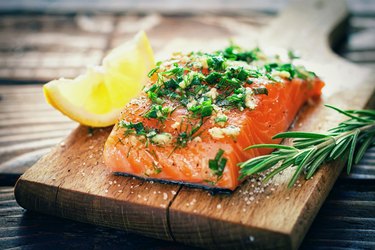
A serving of fish, such as salmon, should exist about the size of a checkbook.
Image Credit: kajakiki/East+/GettyImages
Unless you follow a vegetarian or vegan diet, y'all probable meet most of your daily protein needs by eating meat, poultry and seafood. Only do you know how much you actually demand?
Forth with fat and carbohydrates, poly peptide is a macronutrient that we all need to consume each day. Animal proteins like meat and seafood are considered complete proteins, which means they deliver all ix of the essential amino acids your body needs to stay salubrious, per the Harvard School of Public Health.
Co-ordinate to the United States Department of Agriculture (USDA), adults who get less than 30 minutes per day of moderate physical action should aim for the following amounts of poly peptide daily, depending on age and gender:
- Women ages 19-30: v 1/ii ounce equivalents
- Women ages 31 and older: 5 ounce equivalents
- Men ages 19-thirty: 6 1/2 ounce equivalents
- Men ages 31-50: half-dozen ounce equivalents
- Men ages 51 and older: 5 1/2 ounce equivalents
So, what'due south an "ounce equivalent?" In full general, it's equal to an ounce of meat, poultry or seafood. When it comes to veggie sources of protein, though, the measure refers to a quarter cup of cooked beans, a half ounce of nuts or seeds and a tablespoon of peanut butter.
OK, so you lot know how much you should be getting. But curt of weighing every detail that goes on your plate, how can you determine just how much you're actually getting? Enter our guide, which makes it easier by comparison USDA-recommended protein serving sizes to everyday objects.
White Meat

A 3-ounce serving of chicken is nigh the size of a deck of cards.
Image Credit: LIVESTRONG.com Creative
Serving: three ounces
Nigh the size of... a deck of cards
Calories: 170 (chicken breast); 160 (turkey breast)
Poultry, like chicken and turkey, is full of protein — typically around 20 to 25 grams per serving, co-ordinate to the USDA — and is mostly considered a lean meat, pregnant it provides relatively few calories from fat.
Chicken breast is 1 of the leanest cuts of meat, with only about lx total calories coming from fat. The darker cuts of the bird, including the thighs and drumsticks, are slightly higher in calories and fatty, merely they also deliver more of the minerals fe and zinc, which assist support your allowed organization.
A serving of turkey breast contains about lxx calories from fatty and is high in the amino acid tryptophan, which your body uses to make melatonin and serotonin, the hormones that make you sleepy and promote good sleep, according to the U.S. National Library of Medicine.
Red Meat

A 3- to 4-ounce serving of red meat is about the size of a regular iPhone.
Image Credit: LIVESTRONG.com Artistic
Serving: 3 to 4 ounces
Most the size of... a regular iPhone
Calories: Varies past cut
Beef, lamb and pork are all considered red meat, according to the World Health Organization.
The most common cuts of beef come in the course of steak and ground beef or hamburger. While the calorie count for steak tin can vary depending on the cutting and fat, a 3 1/2-ounce serving is about 310 calories, according to the USDA. On the other hand, a 4-ounce serving of hamburger is virtually 240 calories.
In comparison to beef, lamb is a lower calorie alternative to steak just still offers a flavorful culling to poultry. A 3-ounce serving of lamb is about 250 calories with 152 calories from fat, according to the USDA. Lamb is high in vitamin B12, which is crucial for ruddy claret prison cell formation and proper nerve function, co-ordinate to the Mayo Clinic.
Pork loin is the everyman-calorie red meat choice per 3-ounce serving with 206 calories per serving, according to the USDA, and only 88 calories from fat. Pork is also high in thiamine, a B vitamin that supports healthy metabolism as well as nervus and muscle function, according to the National Institutes of Health (NIH).
While red meat offers a host of nutritional benefits, it has also been linked to colon cancer, according to the American Found for Cancer Research, which recommends limiting your intake to no more than three portions per week.
Fish

A 3- to 4-ounce serving of fish is almost the size of a checkbook.
Prototype Credit: LIVESTRONG.com Creative
Serving: three to 4 ounces
Virtually the size of... a checkbook
Calories: 121 (salmon); 114 (tilapia); 124 (tuna)
Salmon is one of the most popular fish options and has become a staple protein at near restaurants. This fish is probably all-time known for being high in omega-3 fatty acids (fish oil), which may help reduce the risk of eye disease, per the USDA.
Tilapia is among the almost food-dense proteins, according to the USDA. It's an especially practiced source of potassium, a mineral that helps keep your heartbeat regular and tin assist offset some of sodium'due south harmful effects on claret pressure, co-ordinate to MedlinePlus.
At 28 grams per serving, tuna is loftier in poly peptide and also rich in magnesium, which is necessary to ensure proper muscle and nervus function, according to the NIH.
Overall, fish and other seafood are low-fat sources of poly peptide packed with salubrious nutrients — but unfortunately, most of us aren't getting the corporeality recommended past the 2015-2020 Dietary Guidelines for Americans, which are compiled past the USDA and U.S. Department of Health and Human Services. Per calendar week, adults should be eating eight to 10 ounces of seafood, simply most people are only getting betwixt 1 and 5 ounces.
Seafood
Serving: 3 ounces
- 8 to 9 medium shrimp
- 9 to 12 medium scallops
- viii to 9 pieces of calamari
About the size of... a tennis brawl
Calories: 100 (shrimp); 90 (scallops); 149 (calamari)
Shrimp, like most seafood, is relatively depression in calories, according to the USDA. Plus, a serving of shrimp provides nearly the daily recommended value of selenium, a nutrient that promotes reproductive health, according to the NIH. Shrimp are besides high in astaxanthin, an antioxidant found in algae (which shrimp eat) that helps protect confronting inflammation and may help prevent neurodegenerative disease, according to a Feb 2017 review published in Geroscience.
Scallops are high in zinc, which helps promote your immune system, according to the Mayo Clinic. A 3-ounce serving supplies you with almost 17 grams of protein, according to the USDA.
Finally, one of the almost popular seafood options: calamari. As well known equally squid, this is a common appetizer on nearly menus, but it'southward often served battered and fried, making it loftier in cholesterol and sodium, according to Harvard Health. For a healthier choice, opt for grilled calamari, which is still high in zinc and vitamin B12.
Source: https://www.livestrong.com/article/13719938-servings-of-meat/

Post a Comment for "What Does 11 Onces of Roast Beef Llok Like"